
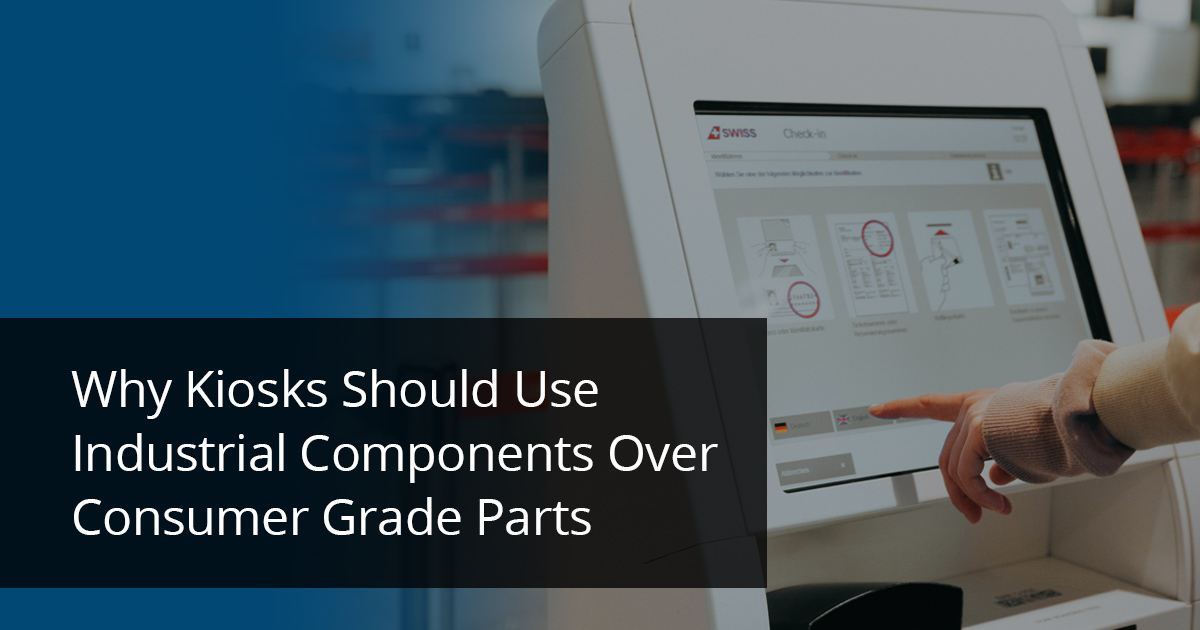
One of the most visible trends in technology is the rise of self-service kiosk displays. Kiosk display sightings are more and more common, and occurring in different places from hospitals to restaurants, showcasing their capability to provide value to various markets. However, modern kiosk and POS designers face a challenge: They must balance performance, space, and user experience within compact, durable systems. Market demand for hygienic, fast, and personalized interactions is rising, driven by trends like natural language processing and integration with digital wallets. Traditional POS and kiosk systems no longer suffice for today’s customer expectations.
Industrial PC components are standardized on a 5–7-year lifecycle instead of the 2-year consumer side standard, a major reason why industrial PC components tend to be more expensive than non-industrial counterparts. Because of their lengthened lifecycle and increased durability, using industrial PC components can lower total costs over time. However, because of the higher initial price, many system builders opt to use commercial class components for their kiosks. The true cost of this approach often does not reveal itself until after deployment.
This trend has resulted in an uptick of reported errors for kiosk systems. Brand-new systems are posting black screens and “no signal” after sleep, even on the first-month of use. Some users also see network speeds drop after reboot, suggesting wider instability. Brief duty cycles reveal stutter and audio degradation, random blackouts with audio still playing, transient stutter after minutes of runtime, or blank menu boards are all being reported. Display/EDID mismatches and loose or vibration-prone connections become chronic failures. The longer a kiosk is deployed in the field, the more likely these errors become.
The problems arise because standard desktops aren’t validated for continuous duty, hard power cycles, or vibration. What may translate as a minor annoyance to a gaming end user, could be a much more critical scenario in an industrial operation. Every black screen is a service call in the field. In signage, POS, robotics, or medical, a sleep/wake or handshake failure means lost revenue and SLA risk. Investing in industrial components, especially for markets such as kiosks, is a matter of ensuring long-term reliability for the system as well as lowering overall costs.
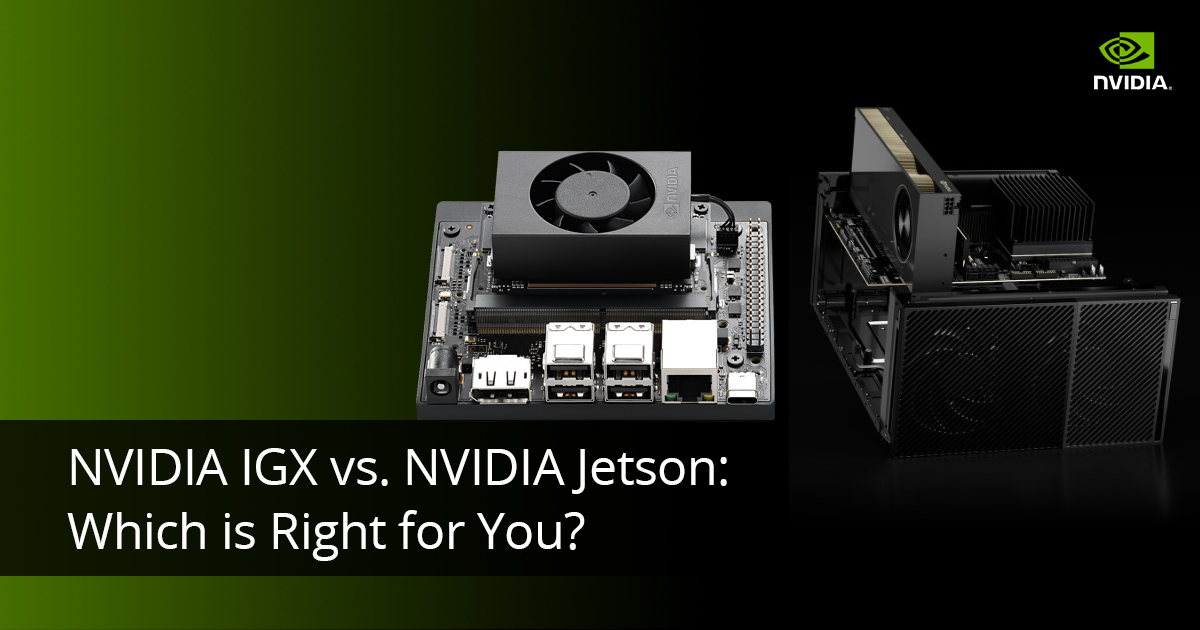
Today, as industrial solutions continue to grow in popularity across a variety of markets, industrial components are now leveraging GPU accelerated SoCs such as the NVIDIA Jetson and expandable systems with PCIe slots for additional storage or discreet GPUs to deliver AI and real time processing in challenging environments. As a result, industrial systems continue to grow even further in popularity, and AI can now be brought to industries and applications previously considered unfit due to constraints regarding power, ventilation, and space.
Using industrial grade components for indoor kiosks is primarily a matter of risk mitigation and reduced costs over time. For outdoor kiosks, it is essential. Opting to build with industrial PC components is not just about avoiding potential disasters, or cutting down on maintenance trips, they offer other strategic advantages as well. Industrial PCs are standardized on a 5–7 years lifecycle of stable availability, avoiding costly software rewrites tied to CPU changes and reducing lifecycle churn. Longer hardware lifecycles stabilize your software stack and certification posture, lowering TCO and avoiding disruptive redesigns mid-deployment. A solution built with IPC components is able to stay on the market for longer periods of time, enabling a system builder to get more value and time on the market from their solutions.
Edge devices add TSN networking and fiber uplinks for deterministic, real-time data, enabling predictive maintenance. Adding remote management capabilities with platforms such as Intel vPro enables system integrators to deploy kiosks at further proximity from their central operations, and can resolve any issues that do occur faster, with no need to travel to the location in which the device is deployed. Centralized remote management from systems reduces on-site service costs and downtime—essential for high-uptime retail, kiosk, and signage operations. Standardized industrial form factors enable compact builds and drop-in upgrades—accelerating time-to-market while preserving longevity.
ASI’s Kiosk and POS solutions leverage AI-enabled embedded boards, NUCs, displays, touchscreens, and edge computing devices to enable smarter, interactive customer journeys while maintaining reliability and design elegance. Blending form, function, and intelligence in compact, durable packages to empower solution providers to build durable, interactive, and intelligent systems that enhance customer experience and operational efficiency. As an ASI partner, you have access to these specialized products and more, including any other components needed to build a complete solution.
ASI is your BRIDGE to the components and systems you need. ASI can also provide integration and turn key services such as component installation, loading BIOS, asset tracking, inventory forecasting, and more. ASI’s industrial PC team consists of industrial veterans empowered to assist you at every step from testing to post sales. With nearly 40 years of experience, ASI is strategically positioned to help make your next industrial project a success.





Leave A Comment